
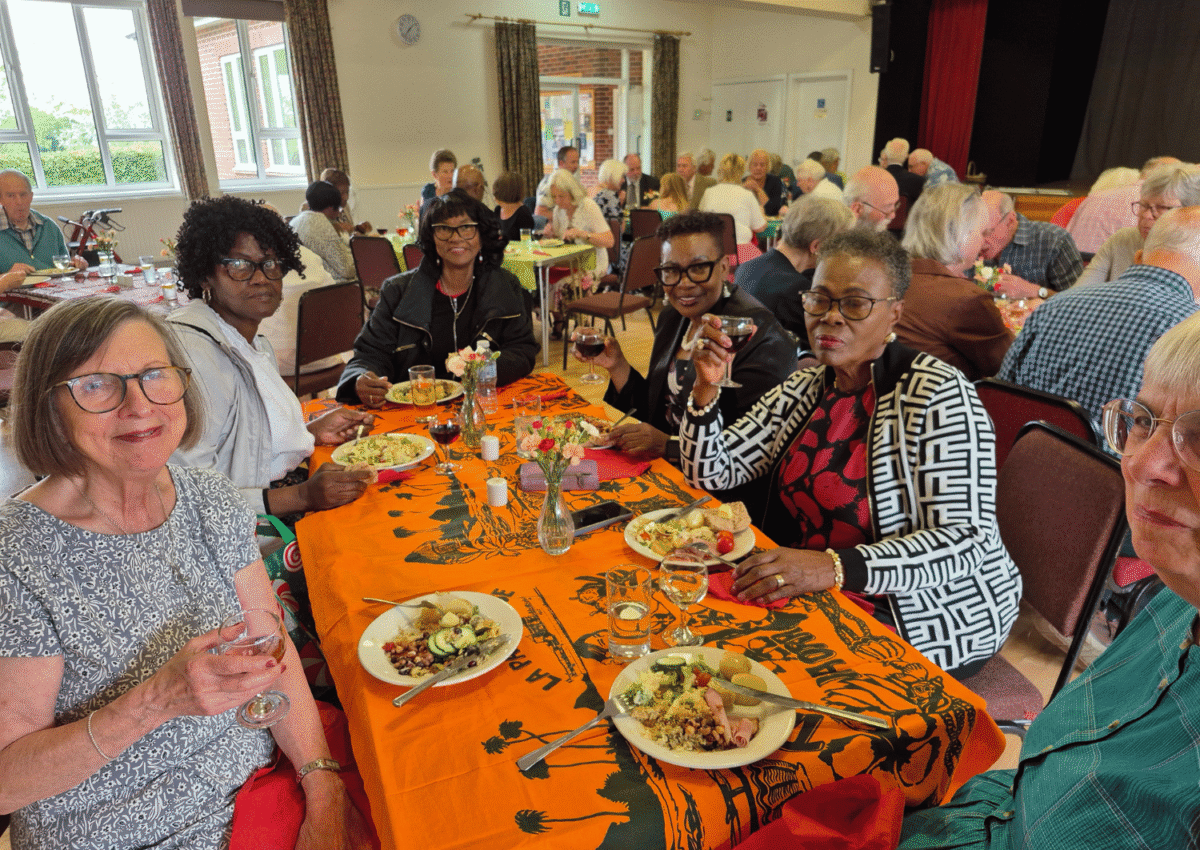
In a Church often shaped by geographic and cultural divides, the long-standing partnership between St James the Great, Colwall (Herefordshire) and St James’ Church, Aston (Birmingham) offers a living example of what intentional relationship across difference can look like. Now approaching its 40th year, the partnership brings together a rural, majority-white parish and an urban, predominantly Black African-Caribbean congregation, rooted in the communities of Aston and Nechells.
The connection began in 1987, when Colwall congregant Leslie Hutton argued that the parish needed exposure to the realities of life in inner-city areas—including economic hardship and different social dynamics. From those early conversations, a shared ministry grew. Colwall initially offered support to Aston’s community advice centre, which served a wide range of residents, including non-Christian clients. Many were surprised by the Christian volunteers’ willingness to offer help with no expectation of conversion or return.
Since then, the relationship has evolved into a mutual exchange between two distinct communities. The churches worship together at least once or twice each year, alternating locations. St James’ Aston usually visits Colwall for the summer patronal festival, while Colwall members travel to Birmingham at other points in the year. Over time, both churches have adapted: Eucharistic services are now held jointly during visits, bridging differences in worship style—Aston’s charismatic tradition and Colwall’s more formal approach.
As Revd Melanie Horton, vicar of St James’, Colwall, reflects:
“This partnership has taught us that faith goes deeper than geographical and social boundaries. It’s helping to shape how we approach ministry here in Colwall.”
That influence has been tangible. Inspired by Aston’s example of community engagement, Colwall has introduced café church, a more relaxed model of worship aimed at reaching families and younger people in their rural context.
“Seeing how Aston connects with their diverse community has encouraged us to think more creatively about how we connect with people here,” says Horton.
The partnership also includes practical support. Each year, Colwall hosts a village quiz night, raising funds for Aston’s ministry and outreach. But over time, what began as mission work has deepened into friendship.
Canon Pastor Sharon Palmer MBE JP, describes it this way:
“The hands of fellowship and communion—embracing conversations and the breaking of bread. As within any family, the ebbs and flows of time only cement what makes us family. What once made us different has become a source of strength and joy.”
Though each church remains rooted in its own local context, the partnership continues to model what it looks like to stay connected across structural divides of race, class, and place. It stands as a rare and enduring example of how churches can walk alongside one another—not to erase difference, but to grow through it.